Hardcore Harry's
Founding designer at Hardcore Harry's. Identity, product, website, and every campaign in between.
Role
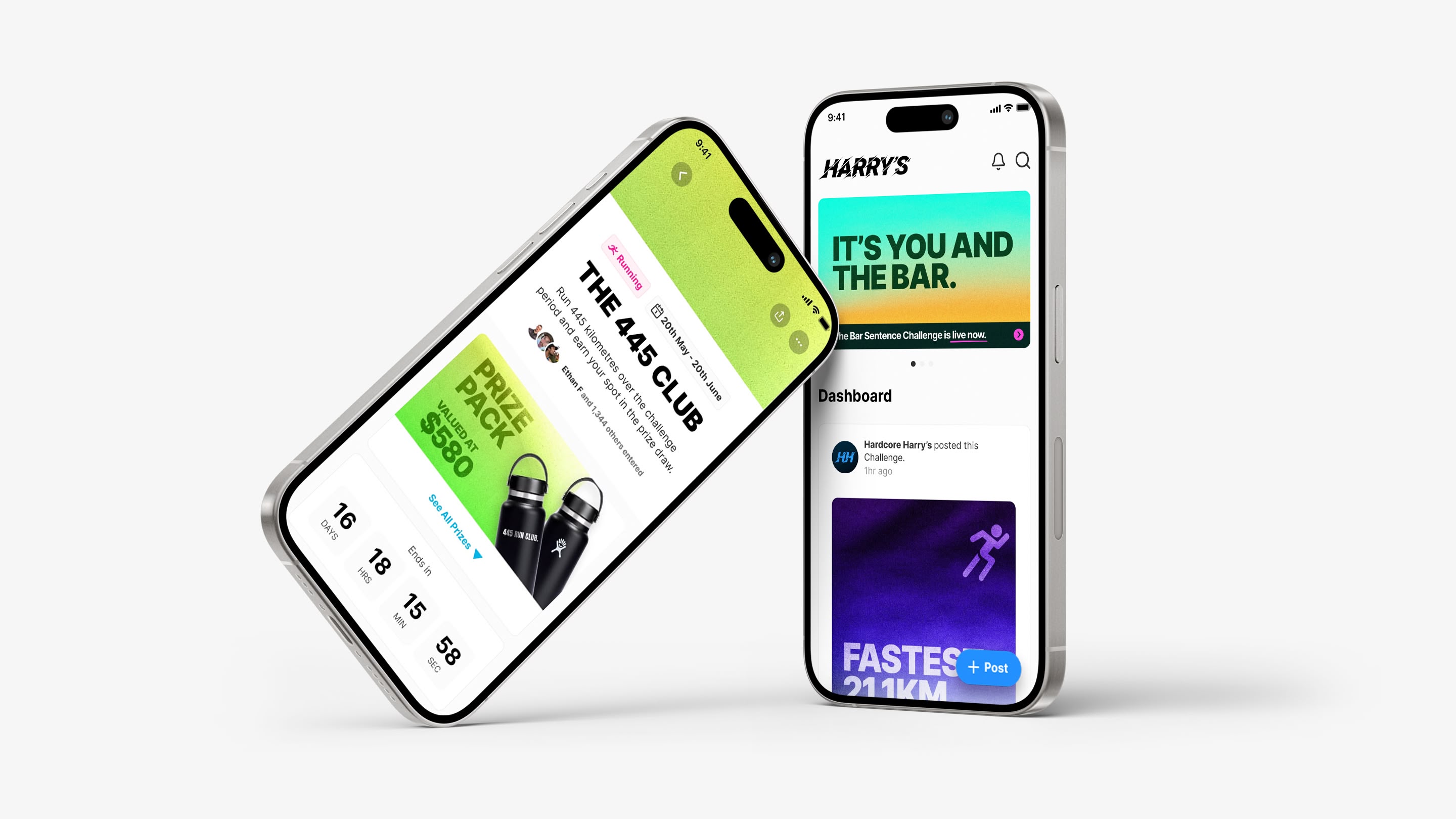
Founding designer, August 2023 to present. Built the Hardcore Harry's identity from zero, then designed the Harry's Challenges app as Lead UX/UI Designer. Promoted to Lead Designer in February 2026 with ownership expanded to marketing site, campaigns, and event design.
Timeline
August 2023 to present. Ongoing.
Team
Design lead across a 3-engineer team (iOS, Android, backend) working across multiple time zones.
Shipped
An identity from zero, the Harry's Challenges app live on iOS and Android, a rebuilt marketing site at hardcoreharrys.com.au, and the brand's ongoing campaign, event, and lifecycle output. $260K AUD in lifetime paid entries. 4.9 stars on the iOS App Store (191 reviews) and 4.8 on Google Play (57 reviews). Design system of 87 components powering 337 production screens.
Context
Hardcore Harry’s started as a bet by the founders. Build a fitness product people came back to because everyone else was there, not because a tracker told them to. Cash and partner prizes were the hook. The community was the real product.
The founders had been running Get Going, an established mobile personal training business, when they began standing up Harry’s as a separate brand and product. I had spent the previous year at Get Going on creative strategy and design. As Harry’s started to take shape, they pulled me across from its inception. There was a brief, a domain, sketches, and a vision document. There was no app yet.
The first thing we built wasn’t a product. It was an online community where the brand promoted users’ achievements and started building the audience. The app came next, as the place that community would convene to actually take on the challenges.
The business goal was ambitious. Grow a consumer fitness product without paid-ad scaffolding, generate real revenue from challenge entries, and make it feel like a place people wanted to be in rather than a utility they tolerated.
Brand foundation
Before the app, there was the brand.
The founders had a name, a domain, and a hypothesis. Everything else needed to be designed. In the first months I built the visual identity from zero: wordmark, colour system, voice, and the first surface the audience ever met. That first surface was not a product. It was a coming-soon page under the Get Going umbrella that positioned Hardcore Harry’s as a community for people who wanted to compete against themselves in real fitness challenges. It was the first conversion test the brand ever ran. By the time the app went into build, the audience it needed to launch onto was already seeded.

Process
I started where the brief started. Paper sketches, on the kitchen table, with our founders. The first decision wasn’t visual. It was: what is this product, really?
Strava is a tracker. Most fitness apps it inspires are trackers too. Harry’s wasn’t going to be a tracker. It was going to be a community where you entered challenges, competed against other people, and won real prizes for finishing them. The design had to lead with social proof and reward, not with charts and stats.
From those sketches I moved into Figma. Low-fidelity wireframes for the four core tabs: Home, Explore, My Challenges, Profile. Each tab was its own design problem. Explore had to make a sprawling library of challenges feel browsable. My Challenges had to give users a sense of momentum without overwhelming them. The Profile had to feel like something users wanted to show off, not a settings screen. The Home tab had to read like a social feed first and a product surface second.
A big early call was committing to a social feed as the front door. A lot of fitness apps push you straight into your own data. Harry’s pushes you into other people’s activity. That decision shaped almost everything that came after, including the Profile design, the badge system, and the way challenge entries appear in a user’s feed as a reactable event.
The build went live in early 2024. From day one, I worked directly with a 3-engineer team across multiple time zones. Async Figma reviews replaced standups. I wrote handoff notes inside Figma frames, recorded Loom walkthroughs for tricky interactions, and shipped weekly. There was no PM. Product calls happened between me, the founders, and engineering.
The app: Harry’s Challenges
Harry’s Challenges is the flagship app under the Hardcore Harry’s brand. The live product runs four core tabs and a content layer underneath them. Every surface is designed and shipped with both light and dark themes.
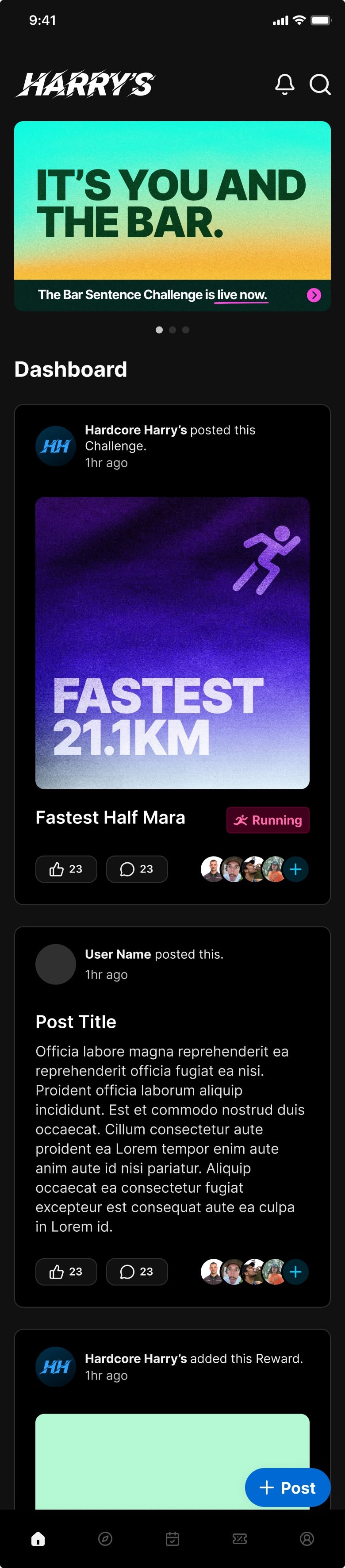
Home is a Strava-style social feed where users see other users’ challenge entries, react to them, and follow their progress. It is the surface that has driven most of the organic engagement, and where I spend the most time iterating.
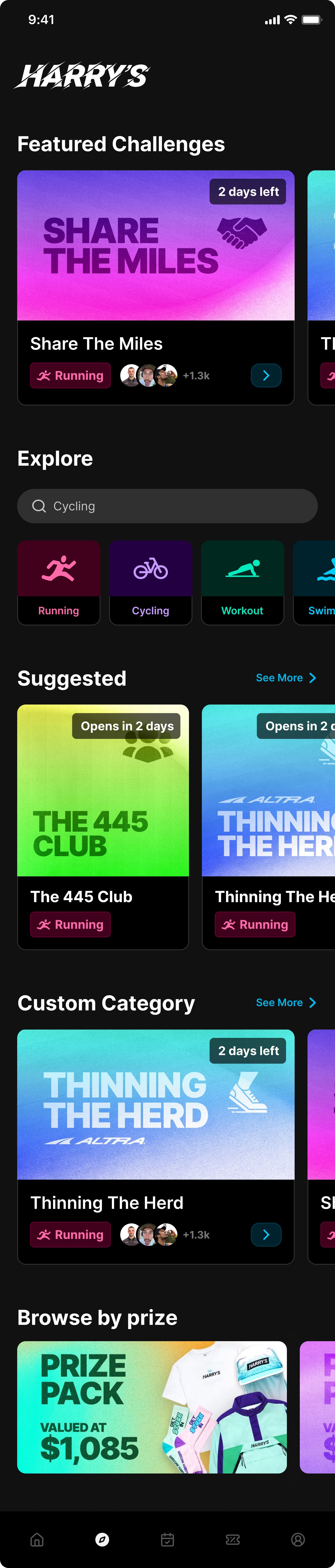
Explore organises the live challenge catalogue into three formats: single-entry, one-per-day, and multi-stage. Filtering by discipline (running, cycling, swimming, workouts) is built into the surface so users find their lane fast.
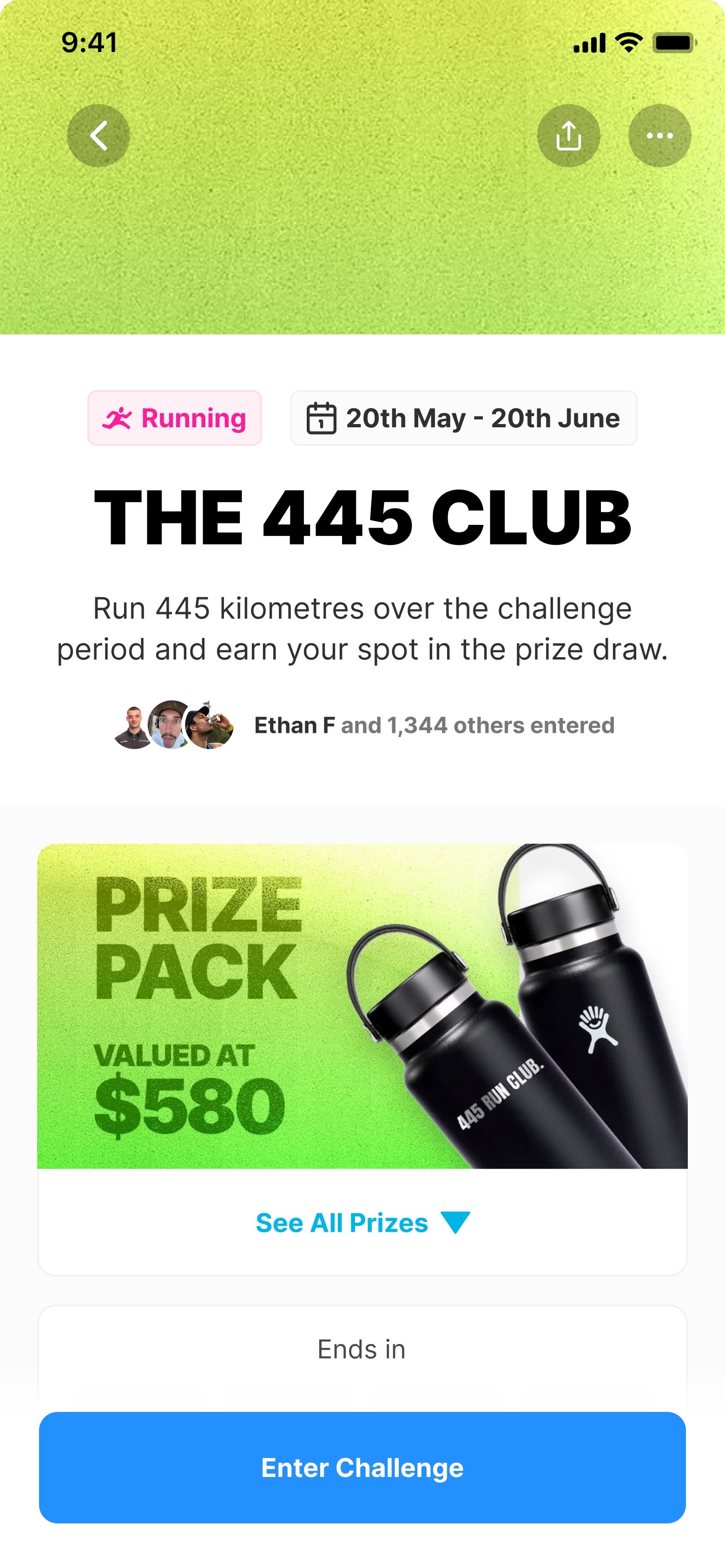
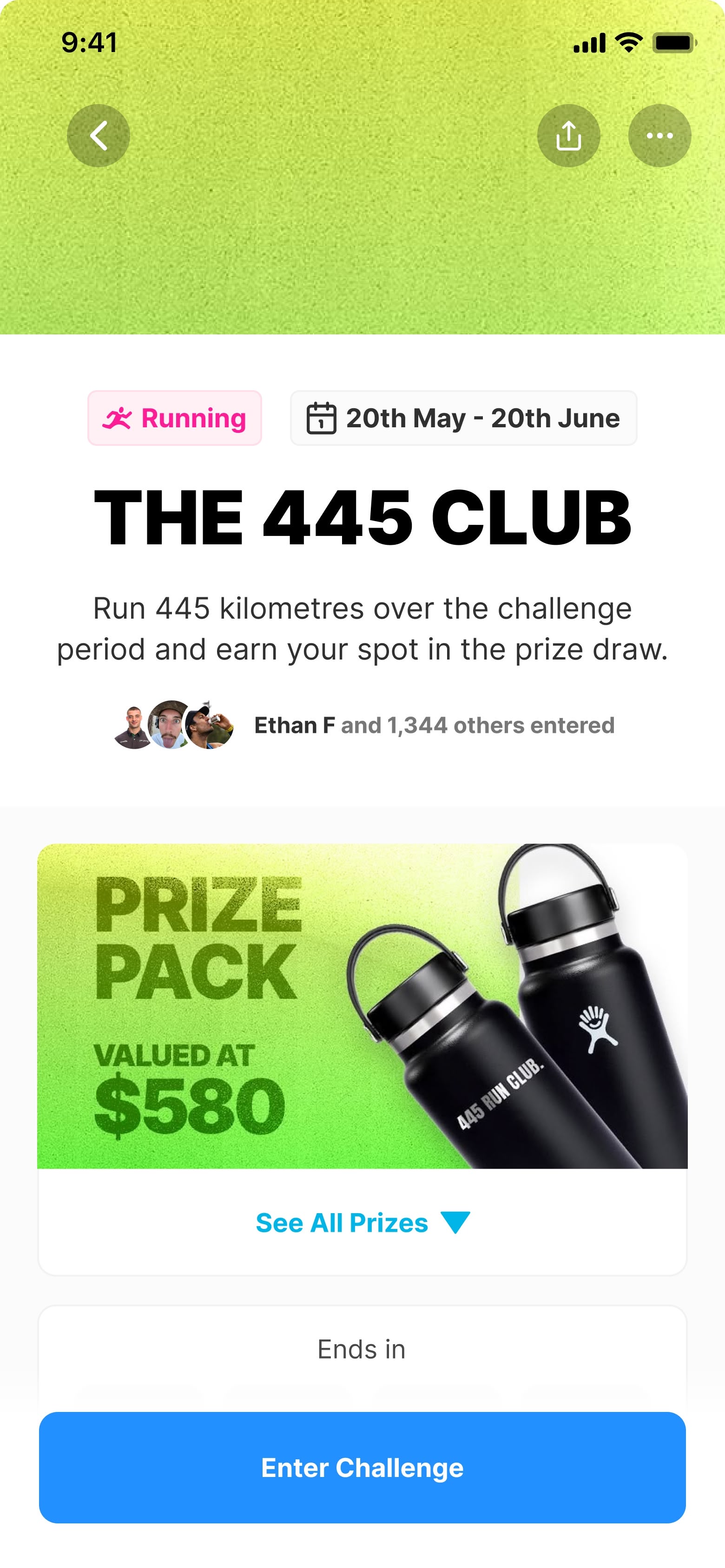
Drilling into a challenge surfaces format, dates, prize layer, partner tags, and the call to enter.

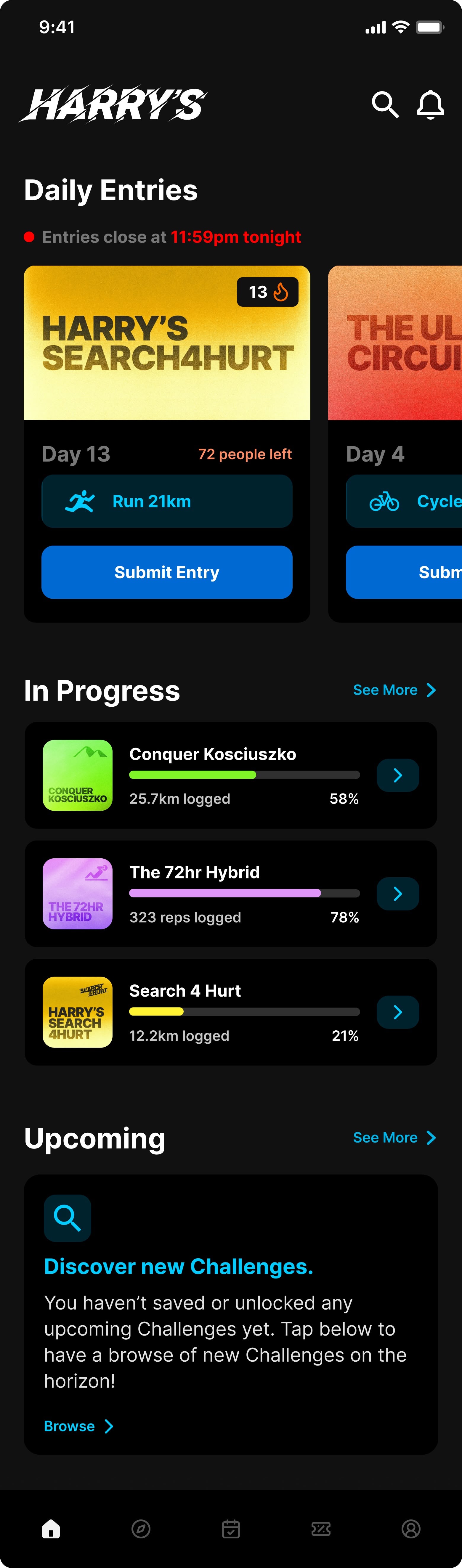
My Challenges tracks active and completed entries, surfaces a user’s current momentum, and shows the tickets they have earned for the monthly prize draws.
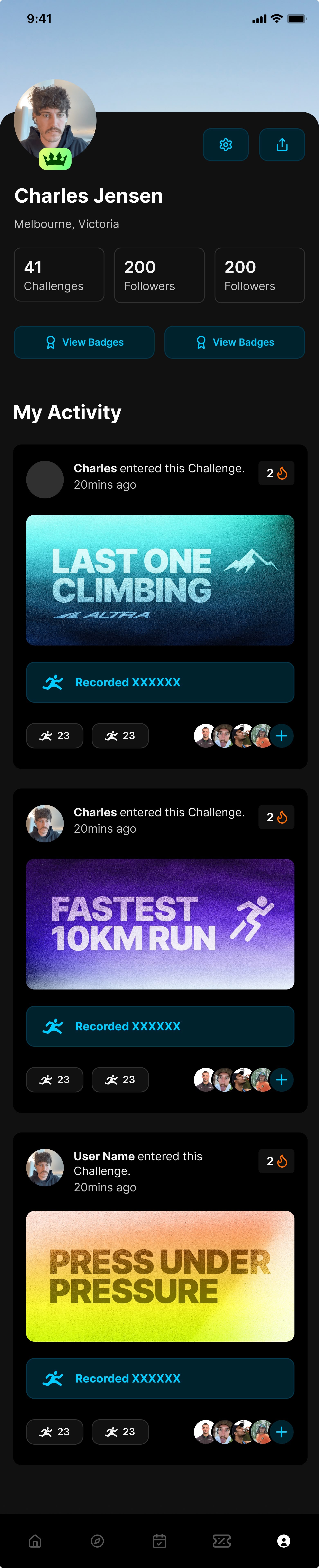
Profile and badges is where users show off achievements. I designed a library of in-app badges that users earn for completing challenges. Badges appear on profiles and on feed entries, which created a flex loop that drives both re-entry and word-of-mouth.
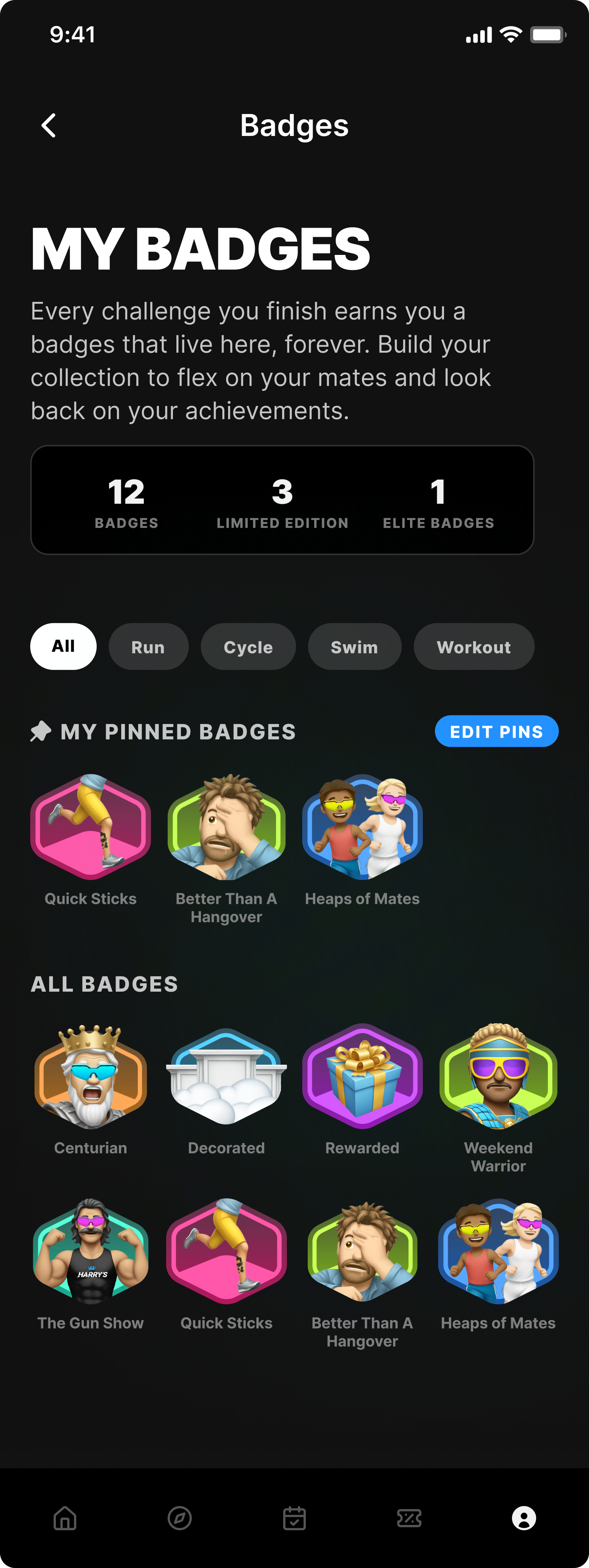
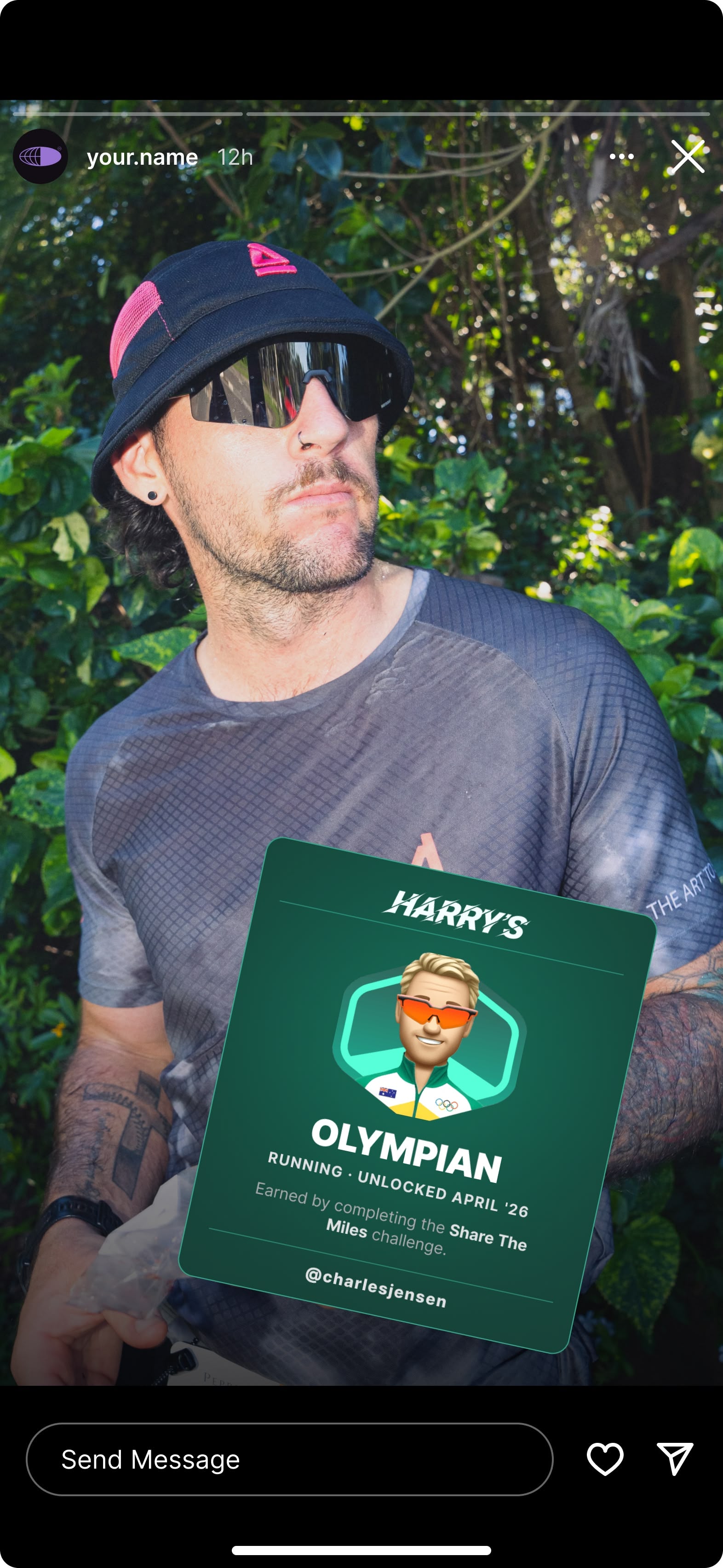
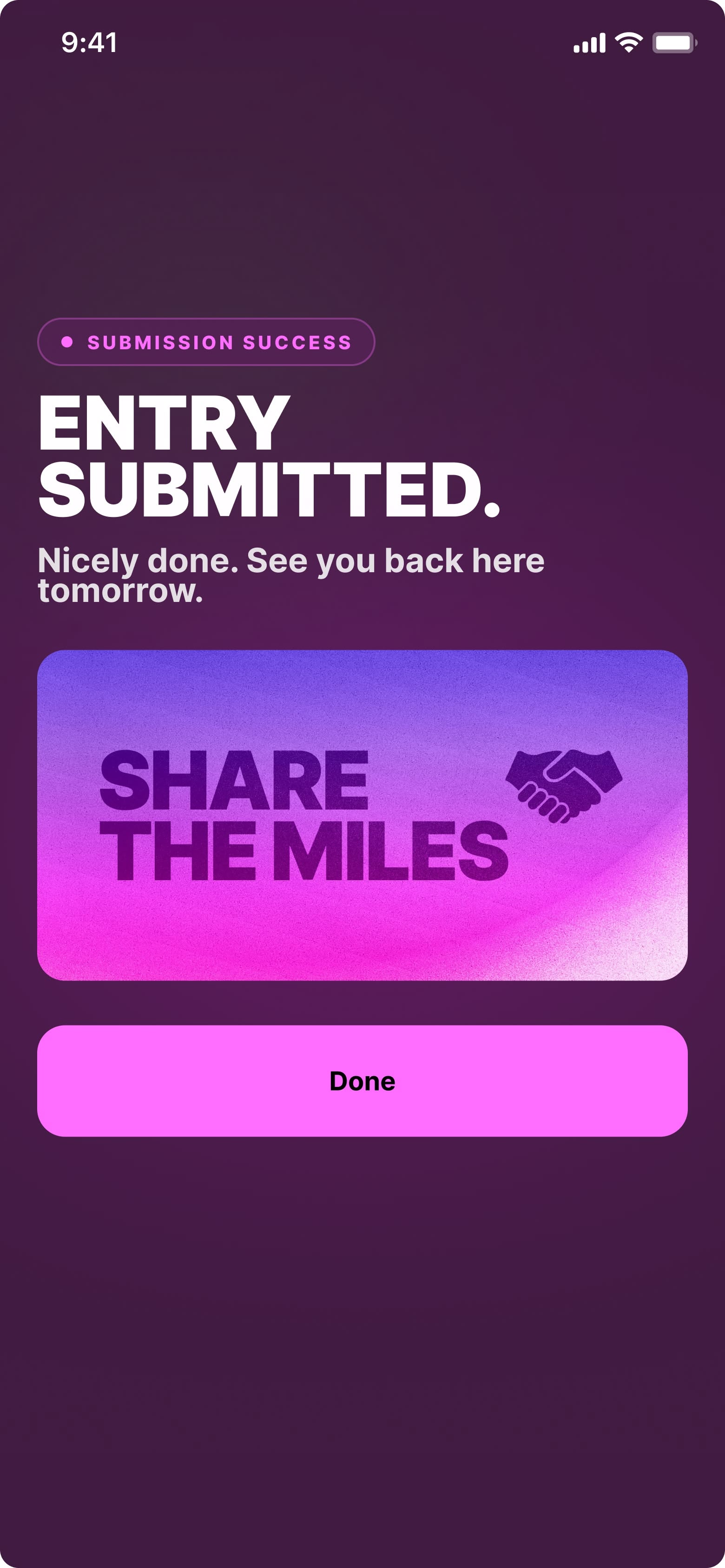
Badges also extend out of the app. Users can share their completion moment to Instagram Stories on a branded template, looping word-of-mouth back through social.
Challenge Series, the evergreen progression layer currently in implementation, sits on top of the time-gated catalogue. Detailed in its own case study.
The full product in motion, as a single walkthrough.
UX Friction Reduction
7 taps become 4
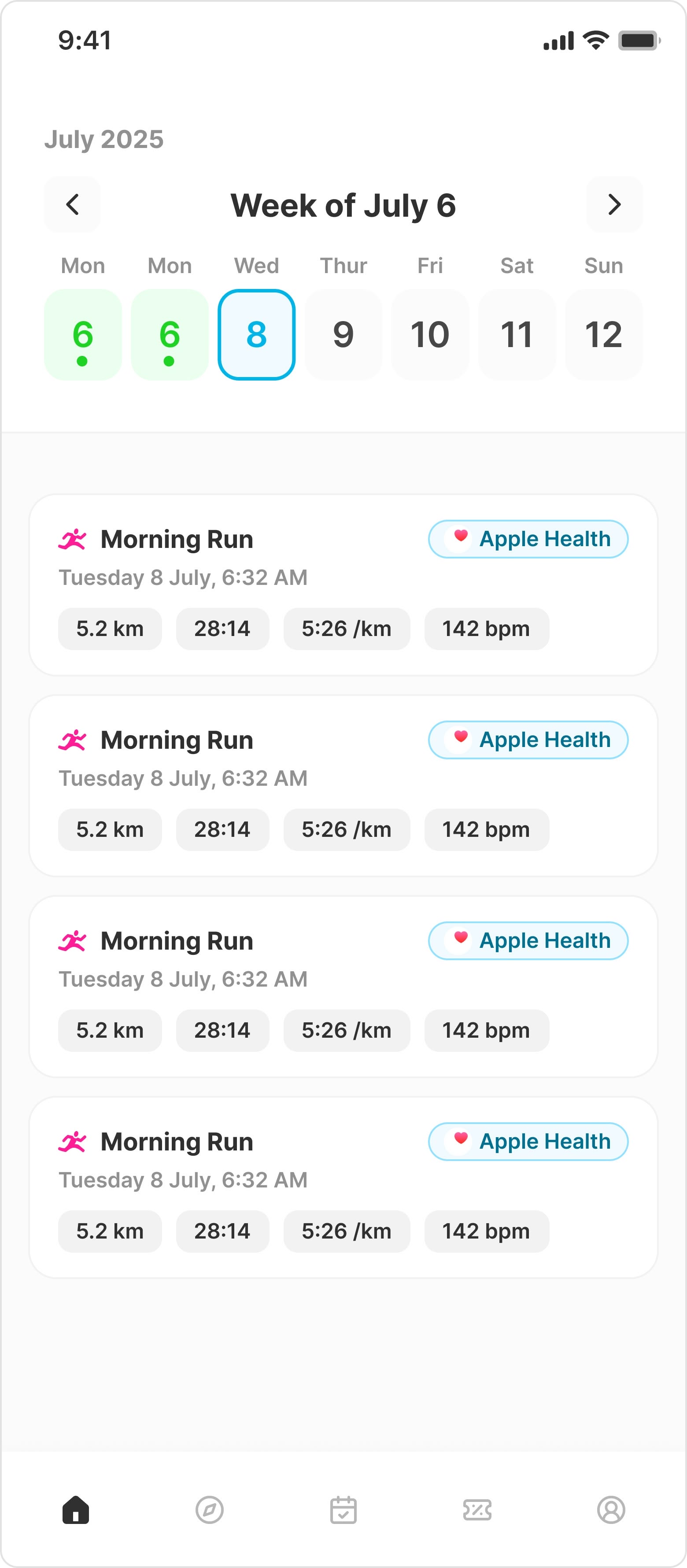
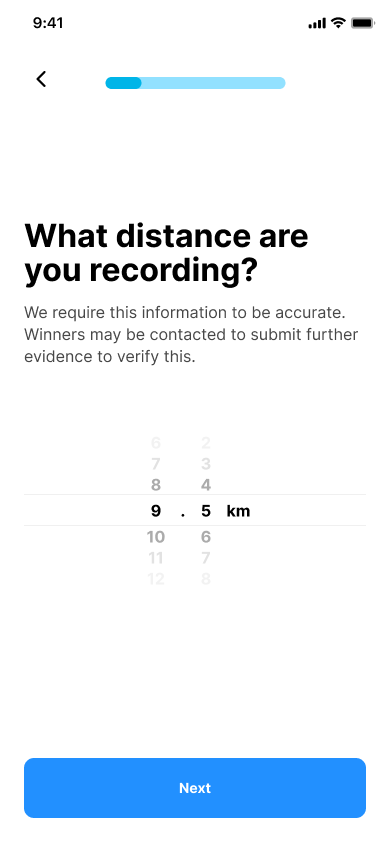
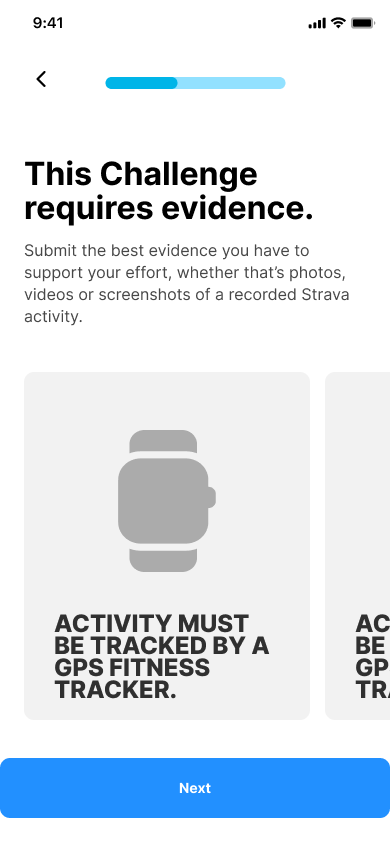
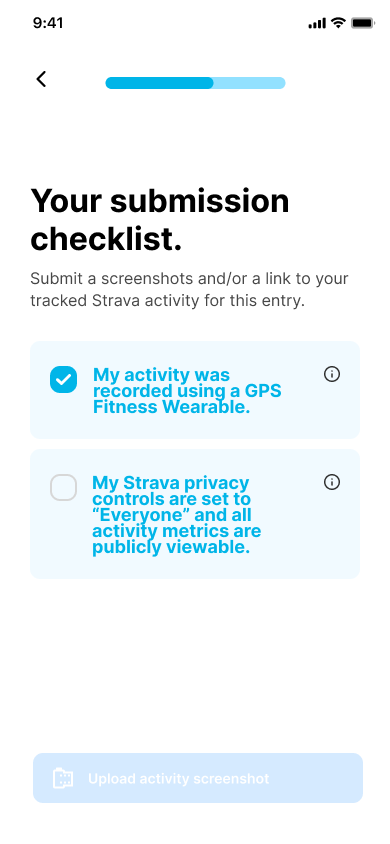
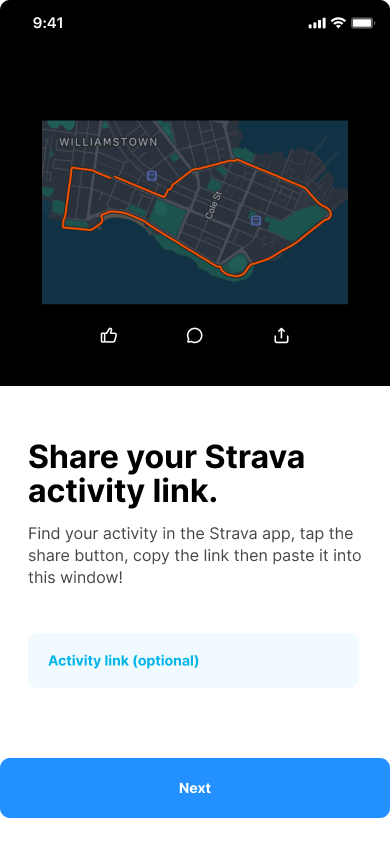
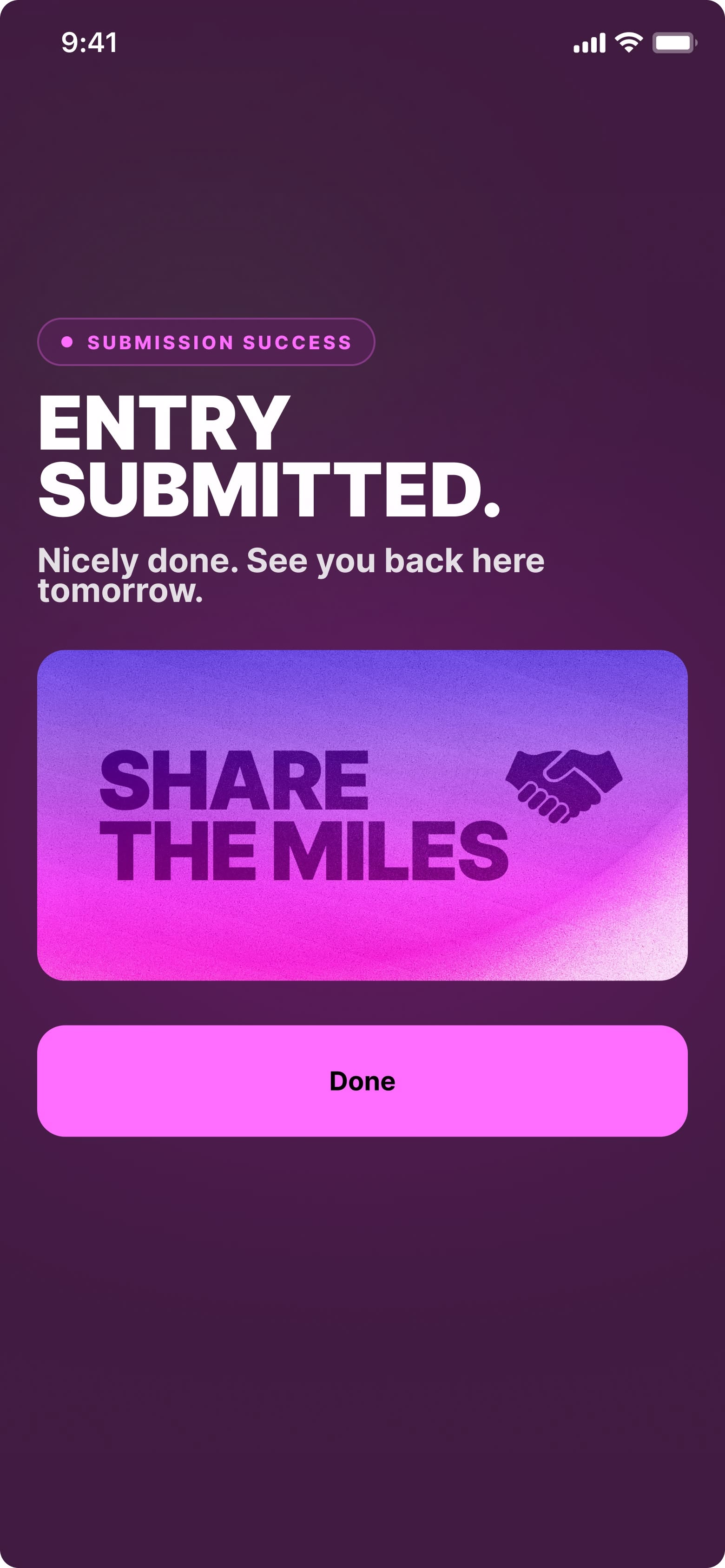
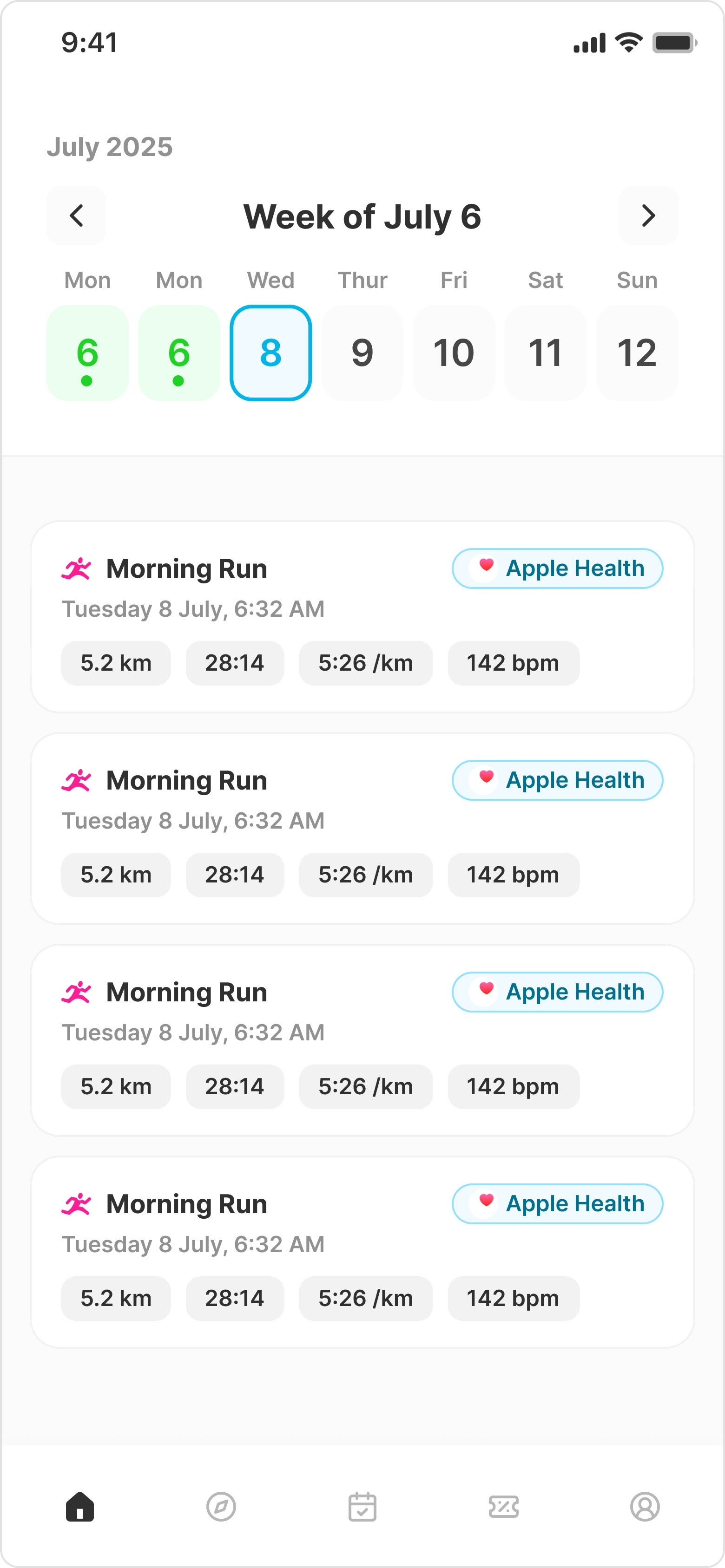
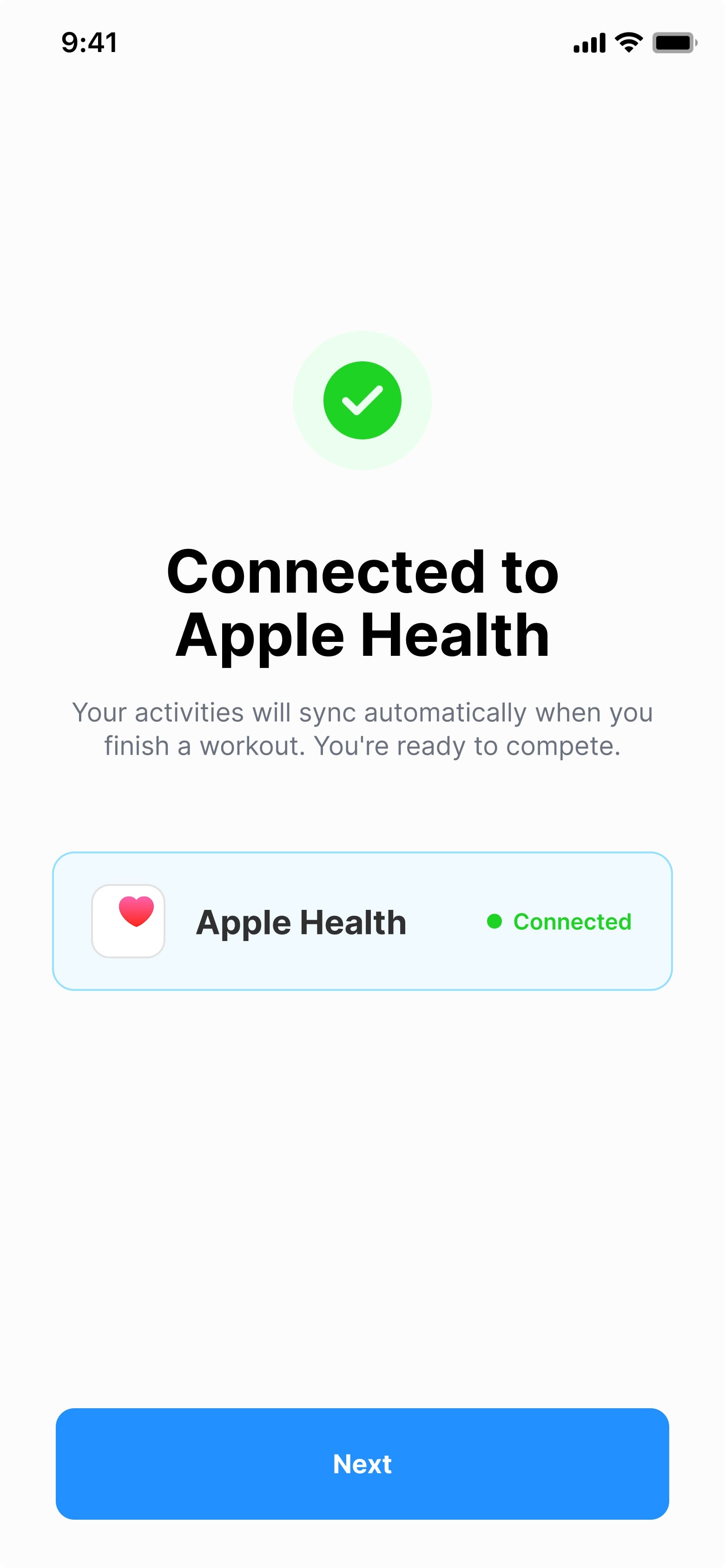
Entering a paid challenge used to be seven taps of pain. Link Strava, grab a screenshot, paste the details, wait for someone to verify it manually. I redesigned the flow around Apple HealthKit and Google HealthConnect. An activity now imports directly from the user’s smartwatch, and the entry is signed and verified on the backend with anomaly flagging for suspicious submissions.
The visible surface got smaller. The system under it got sharper. Most of the paid entry revenue at Hardcore Harry’s now moves through this redesigned path.
The system
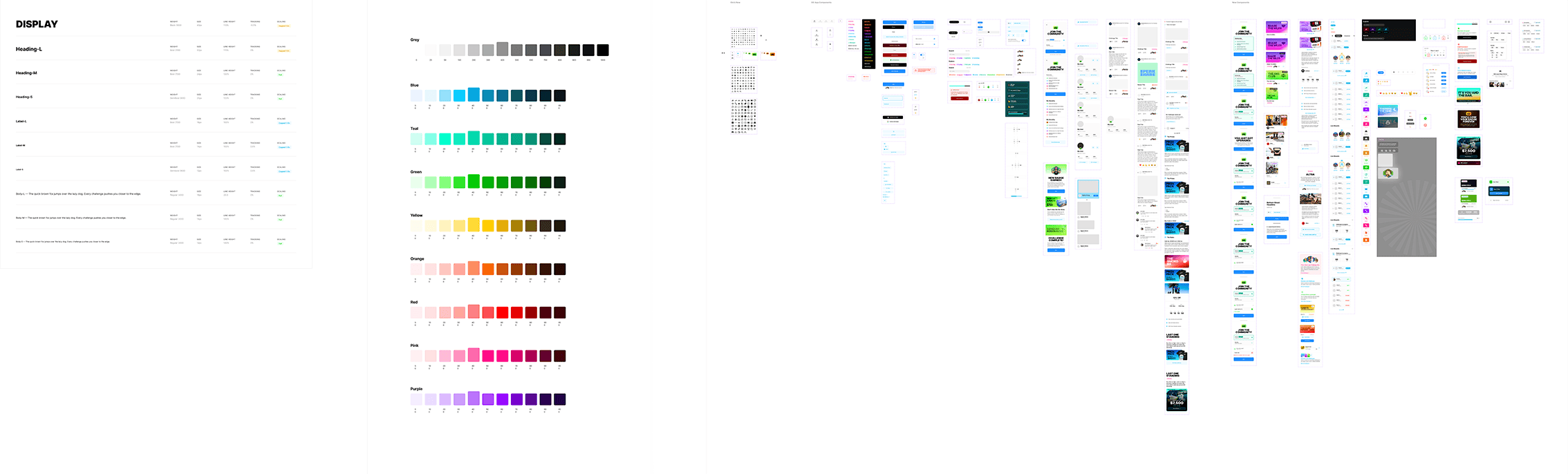
Every surface across the product references the same design system: 87 components, 601 variants, 337 live production screens, with 148 more in pipeline. Tokens, modes, effect styles, and a documented dev handoff workflow that keeps a three-engineer team aligned across iOS, Android, and backend. Detailed in its own case study.
The marketing website
hardcoreharrys.com.au is where the brand meets everyone who is not already in the app.
The old site had drifted. The homepage still spoke to a pre-launch audience. The information architecture had accumulated pages for events, features, and campaigns that no longer reflected the current product. Conversion signals were split across three different sub-systems. The design language had moved on since the site was first built, but the site had not.
I rebuilt it from the ground up.
The information architecture got redrawn to reflect what Hardcore Harry’s actually is now: a brand with a flagship app, two live endurance events, and a growing subscriber base. Every page has one conversion job. Every visual moment references the current design system.
I used Claude Code as an implementation partner for the build. Every design decision is mine: information architecture, page-level conversion goals, layout, brand voice, motion, typography. Claude Code handled the production code, which compressed the gap between a Figma layout and a live browser page from weeks to hours. Every layout choice was iterated in the browser, not in a static comp. That workflow is now how I work on the marketing side of the brand.
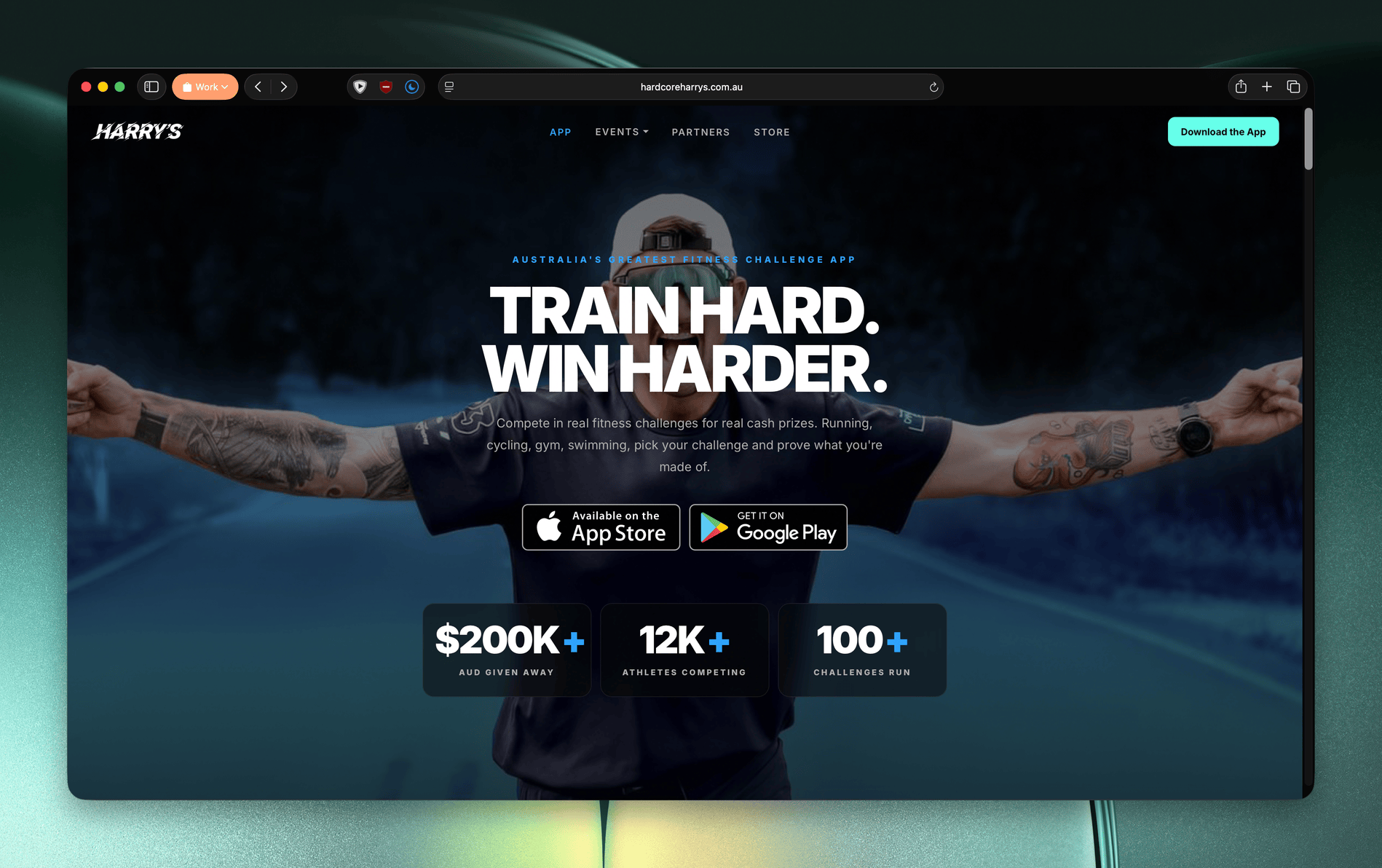
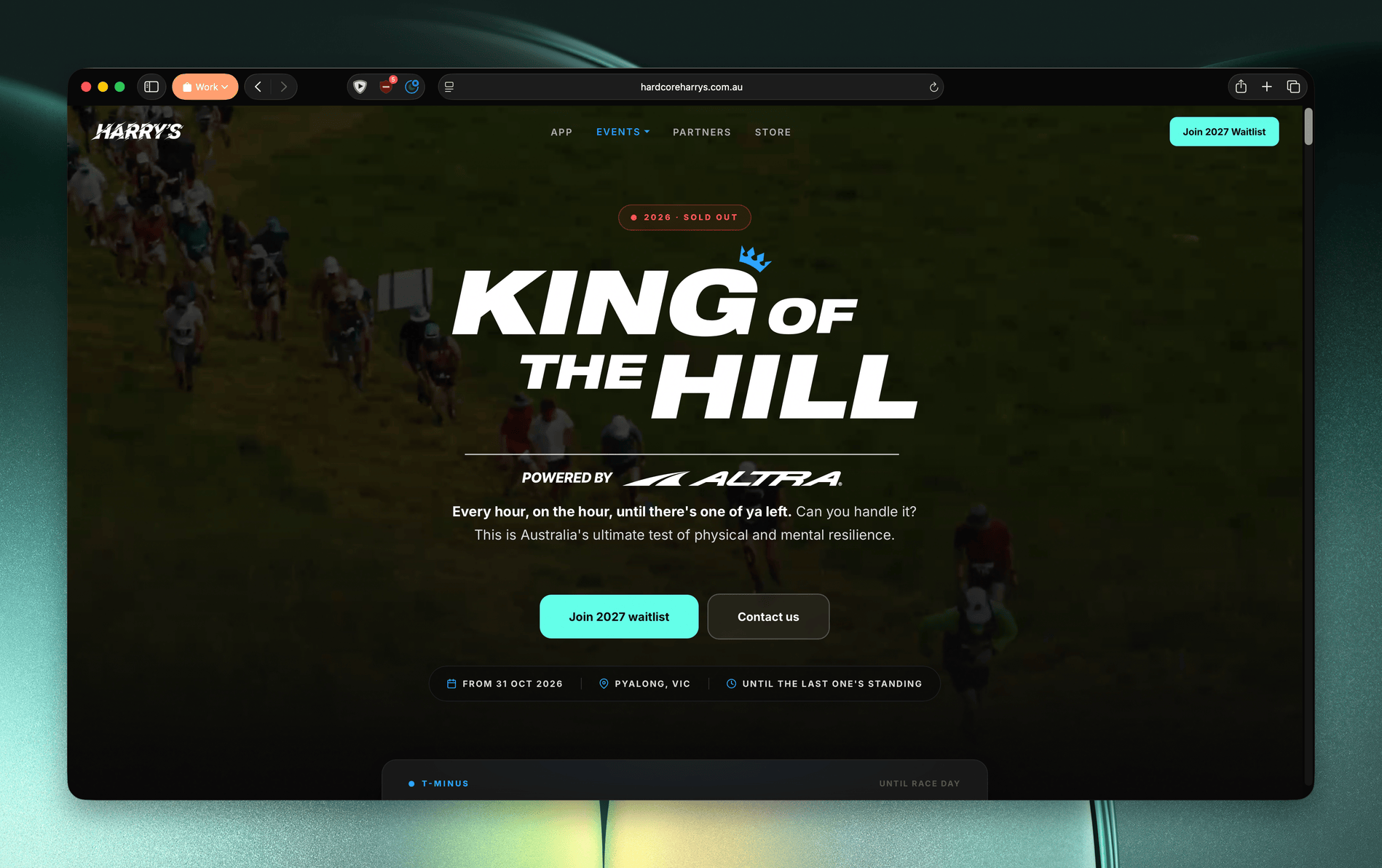
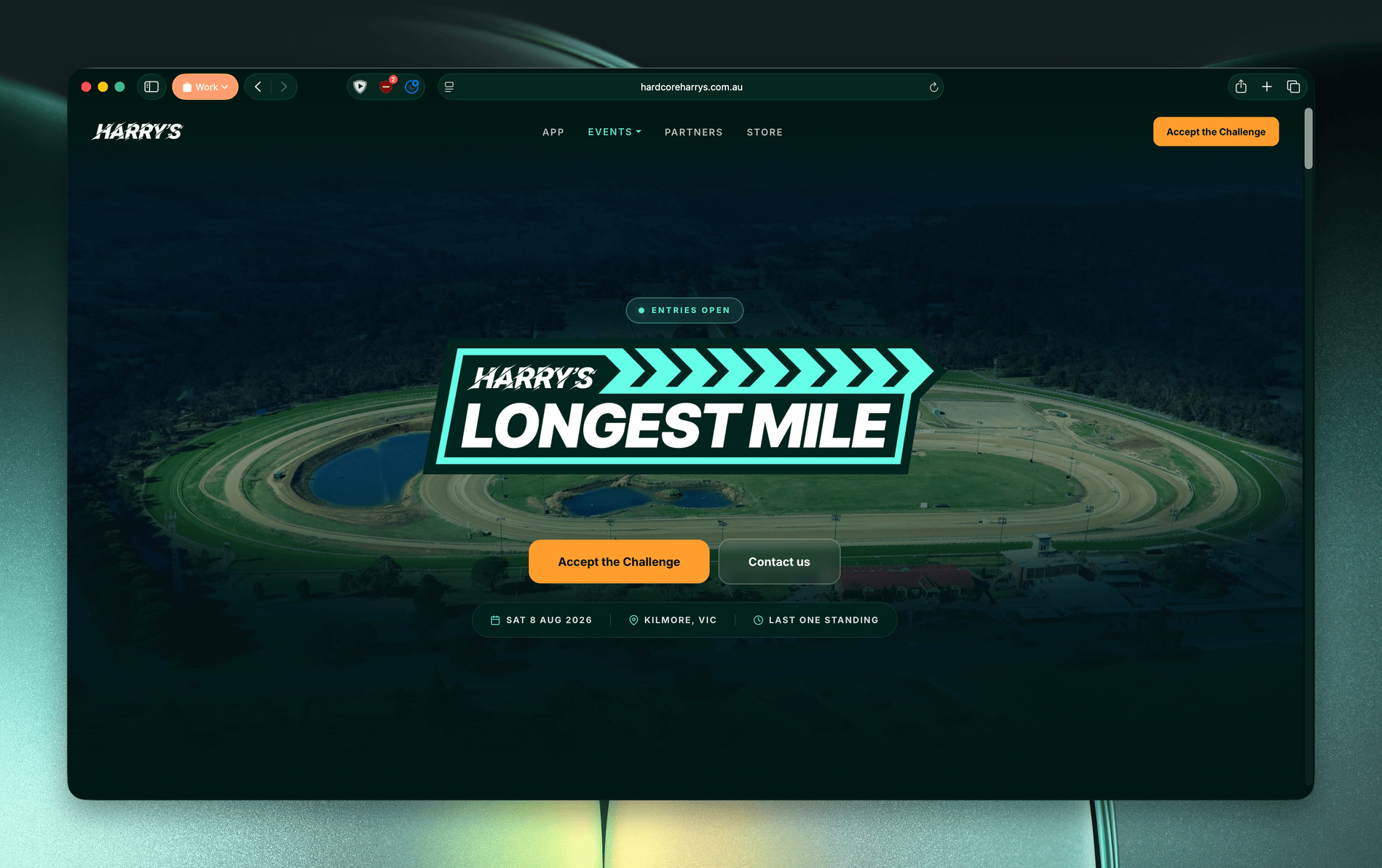
Two dedicated event landing pages sit inside the same system. King of The Hill is the flagship annual event, detailed in its own case study. Harry’s Longest Mile is a shorter format event running in parallel. Both use the site as the conversion surface during their ticket sale windows.
Campaigns and channels
Beyond the app and the site, the day-to-day marketing output runs across paid social, App Store creative, Google search ads, and Strava integration promos. All of it comes from the same design system.
Outcome
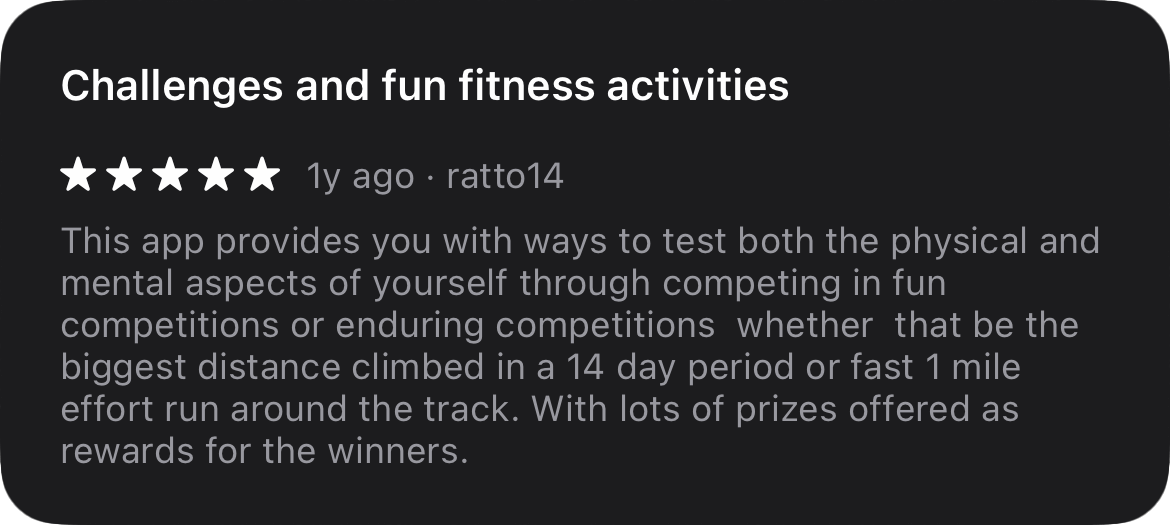
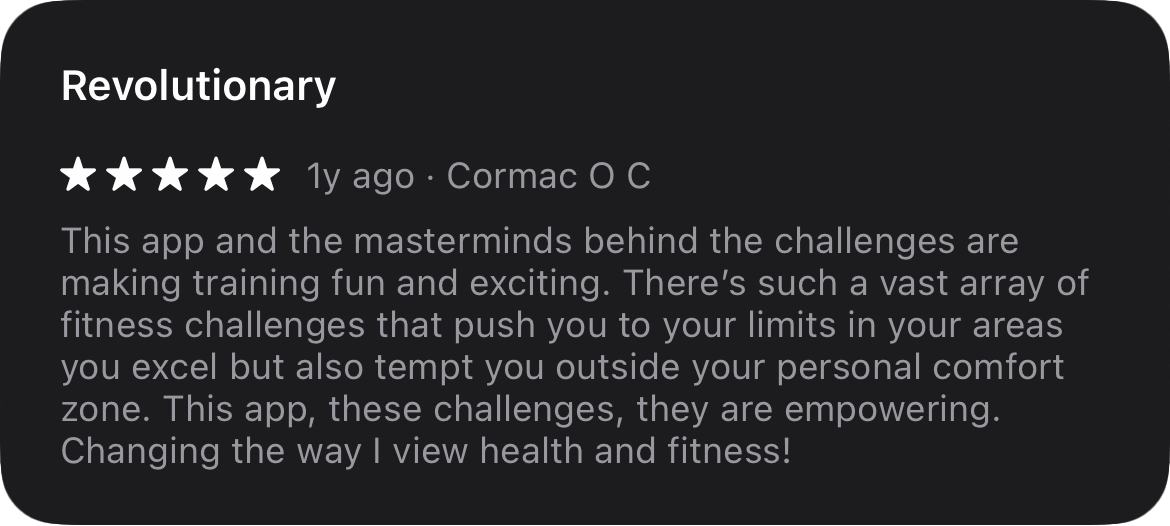
The app holds 4.9 stars on the iOS App Store (191 reviews) and 4.8 on Google Play (57 reviews) across 10,000+ installs. Lifetime paid challenge entries have generated $260K AUD in revenue across 1,082 entries, with $94K booked in the first half of 2026 alone. 170 active subscribers drive $24K ARR. In the first half of 2026, 2,101 new users joined and entered 15,542 challenges between them.
That is the scale. The reviews are more useful for understanding why.
Hardcore Harry’s now operates as its own brand and product. In February 2026 I was promoted to Lead Designer.
The product, live
See it in the wild.
Hardcore Harry’s Challenges is on the App Store and Google Play. Browse a live challenge and see the app for yourself.


What’s next?
148 new screens are in pipeline. Most are second-order surfaces extending Challenge Series, the social feed, and a new sponsor integration layer. The product is moving from “fitness challenge app” toward “community fitness platform”, and the design work is shifting with it.