Designing for evergreen retention
Phase 1 IA and structural design for the Challenge Series, currently in implementation
Role
Project lead, owning IA, structural design, and visual design end to end as Lead Designer.
Timeline
Phase 1 IA and structural design complete. Engineering implementation in progress. Not yet live.
Team
Design lead on the project. Built for a 3-engineer team.
Shipped
Locked IA, MVP scope, and structural design for the Challenge Series across Running, Cycling, and Swimming. Static badge reward system. Elite Levels, Workouts, and the animated celebration reveal cut from MVP for phased delivery.
Context
By early 2026, the Harry’s catalogue was producing real engagement. The app had reached 10,000+ installs, 4,943 lifetime users, and over 20,000 challenge entries. But the engagement shape underneath those numbers told a more complicated story.
Challenges were time-gated. They started, ran, ended. Users entered, competed, and waited for the next one. The model produced sharp engagement peaks around live events but no continuous reason to come back during the gaps. The founders had wanted a long-term progression layer from day one. Engagement data from year two made the case undeniable.
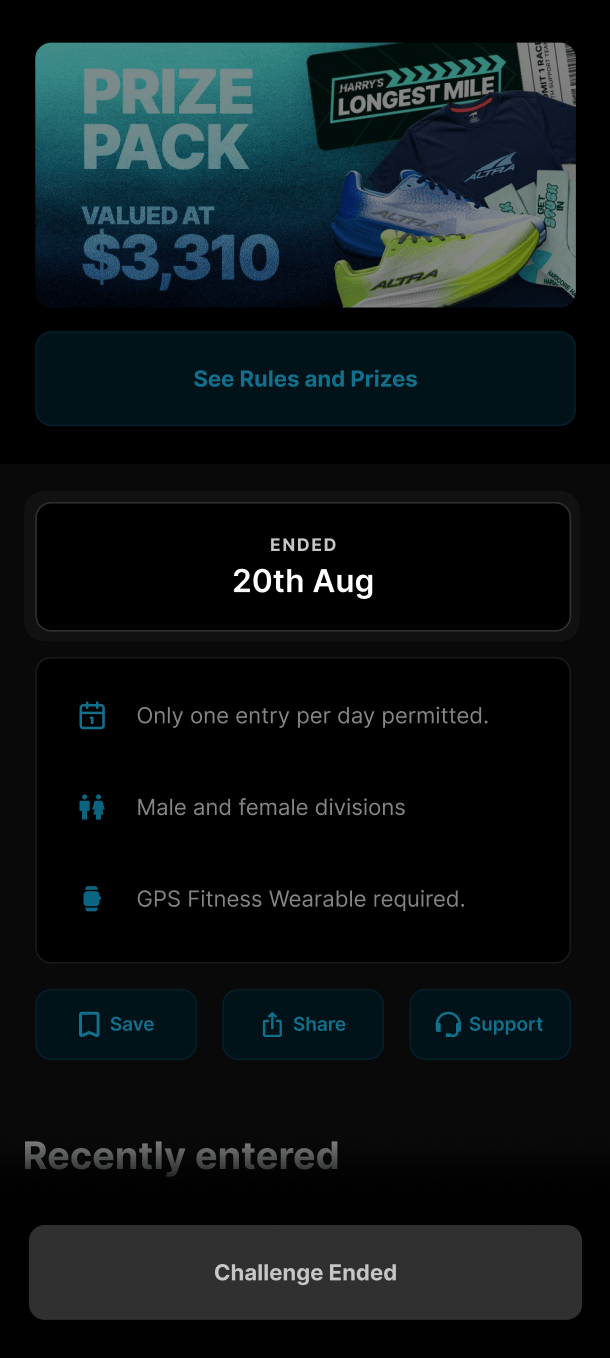
The brief was direct. Design an evergreen layer on top of the time-gated catalogue. Give users something to always be working toward. Make the reward feel earned, not generated.
Process
I started in FigJam. Four disciplines (Running, Cycling, Swimming, Workouts) and one shared structural concept. The work split into three problems.
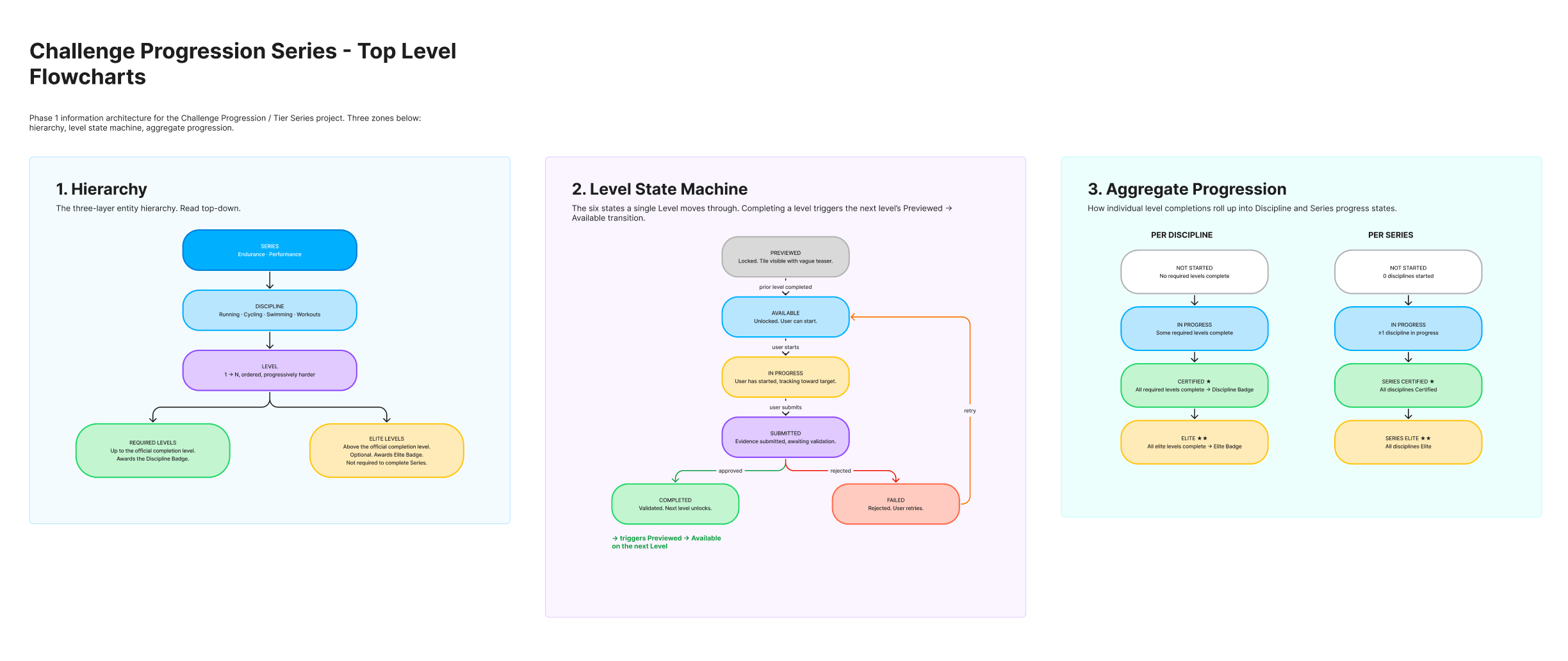
Tier structure. Each Series would consist of multi-stage levels of increasing difficulty. For Running, that meant 5K through to marathon. Cycling and Swimming followed analogous progressions. A clear top threshold defined Series completion.
The Workouts puzzle. Running, Cycling, and Swimming are homogeneous disciplines, where a level of difficulty is a longer distance. Workouts isn’t. A level in a Workouts Series might be an AMRAP, a strength session, or a bodyweight test. The IA needed to support a heterogeneous umbrella where every level can be a different exercise without breaking the progression logic. That problem alone took several iterations. Workouts is being held for v2 so the structural solve can land properly without bottlenecking the launch.
Elite tier positioning. The original draft put Elite as a fifth discipline. That was wrong. Elite isn’t a different kind of training, it’s a higher threshold above Series completion in each existing discipline. Moving it above the threshold rather than alongside the disciplines simplified the IA and made the progression goal clearer for users. Elite Levels were ultimately cut from the MVP launch, but the structural placement is locked in for reintroduction once user adoption data supports it.
Solution
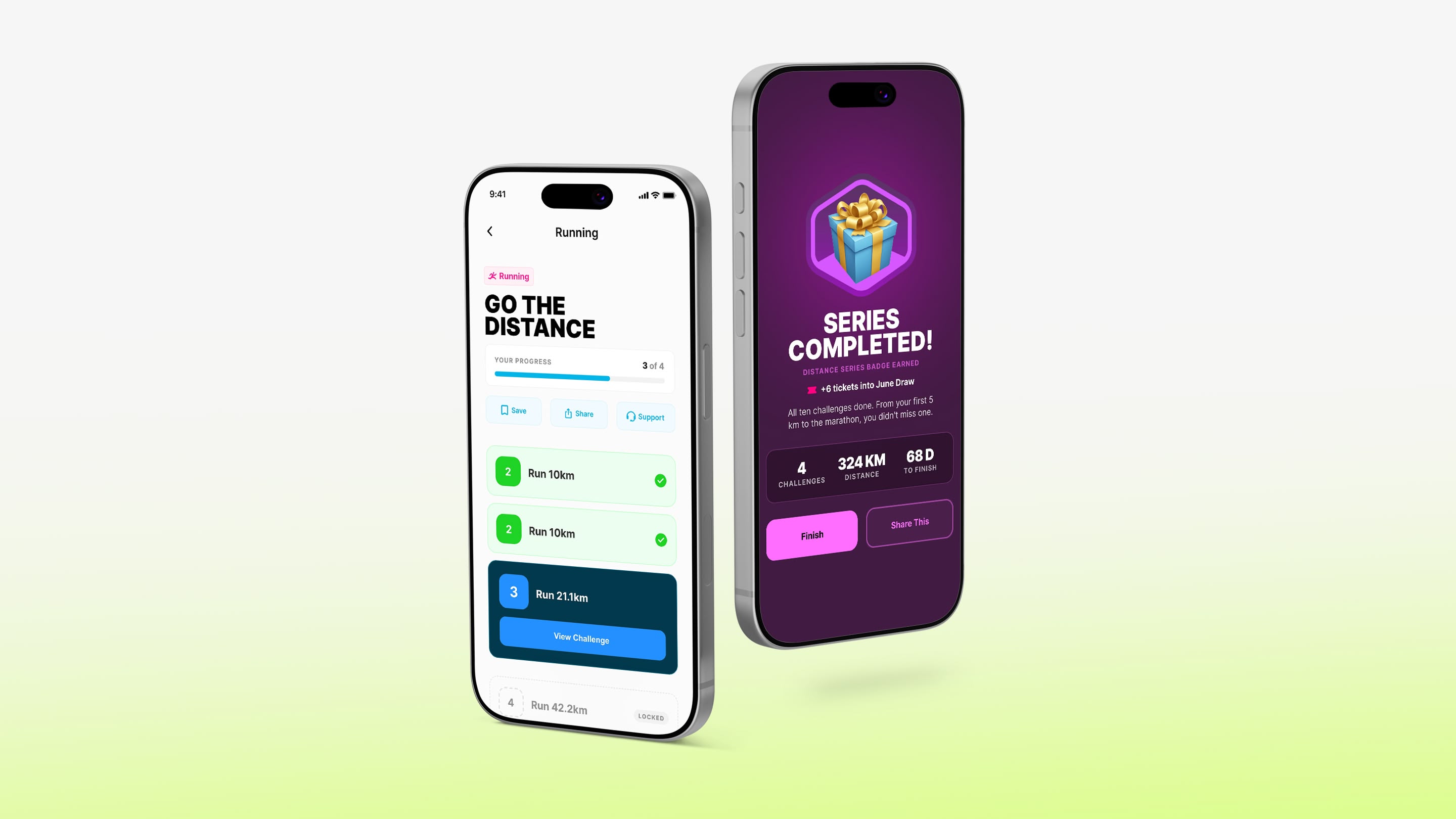
The MVP ships with three disciplines and a locked progression structure. Elite Levels, Workouts, and the animated celebration reveal are all deferred to phased releases so the core loop can prove itself first.
Series discovery
Users find their Series on the Explore surface. Each discipline gets a distinct entry point, with the current level and progress state shown at a glance.
Series details
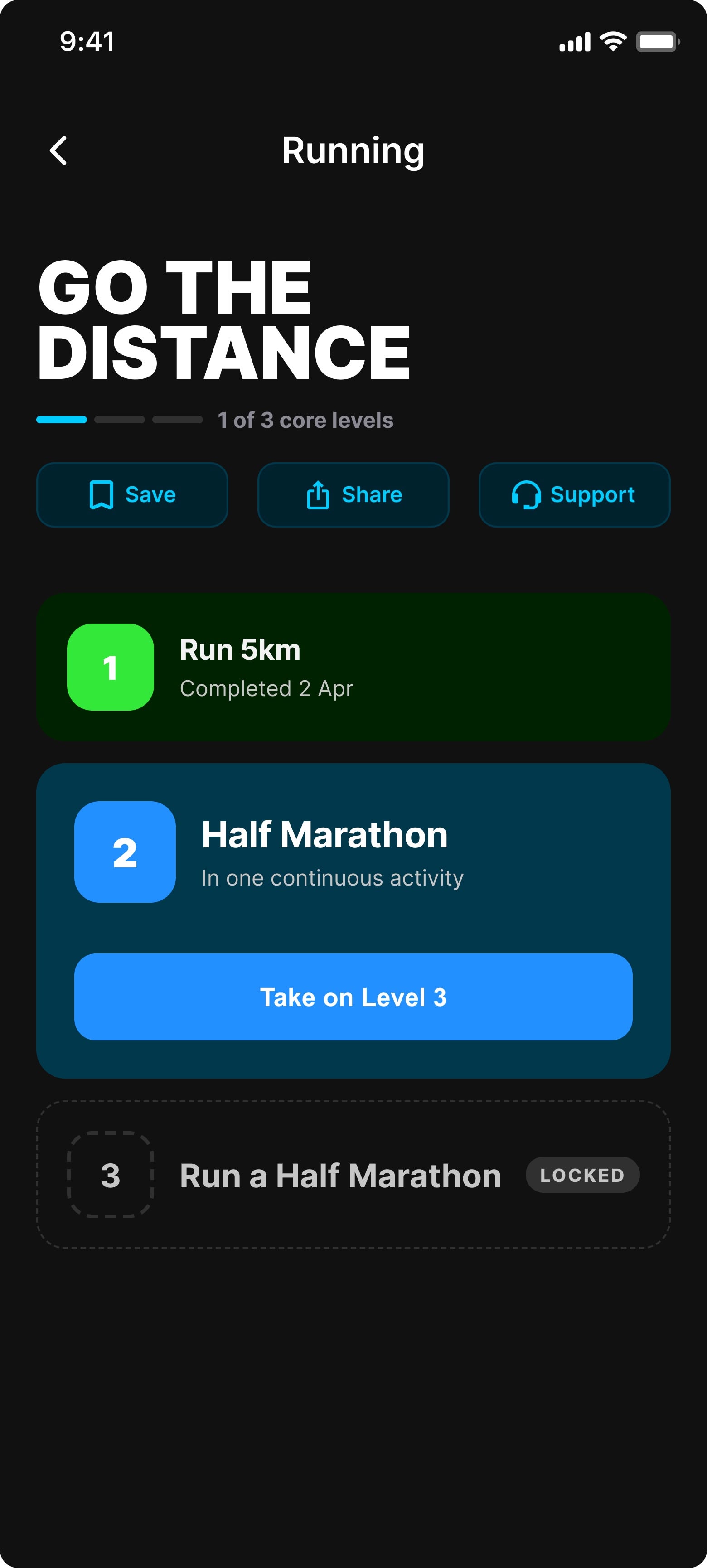
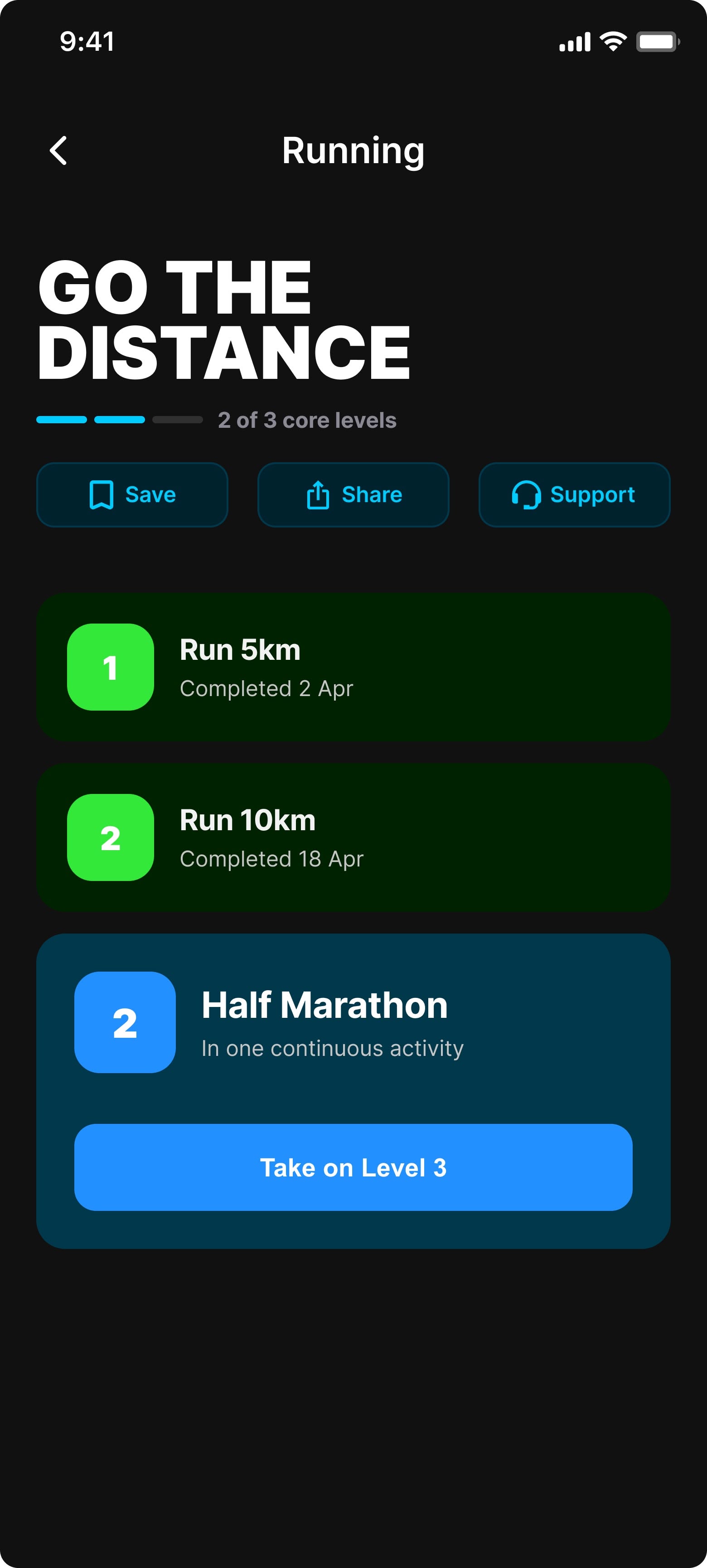
Once inside a Series, the user sees the full progression, their current position on it, and what’s next.
Level progression
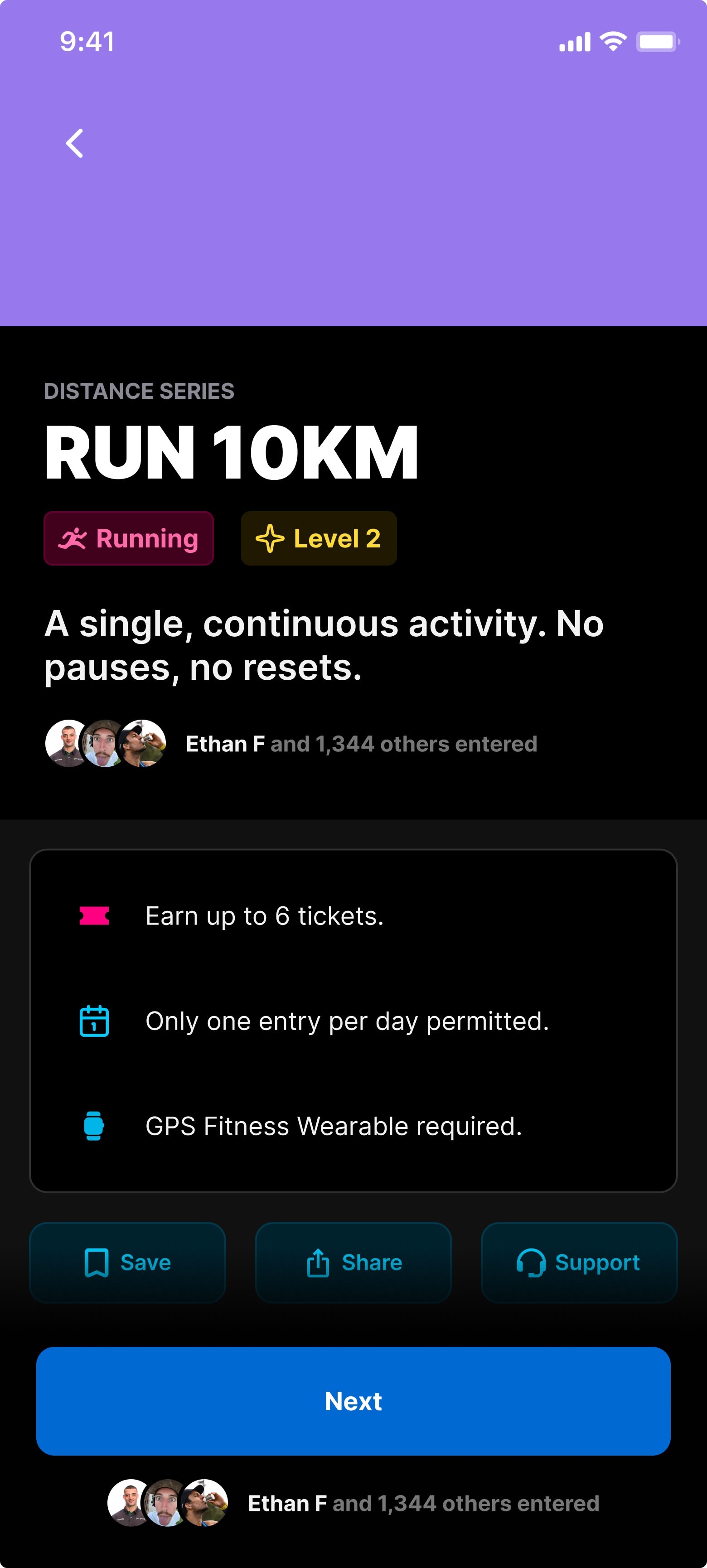
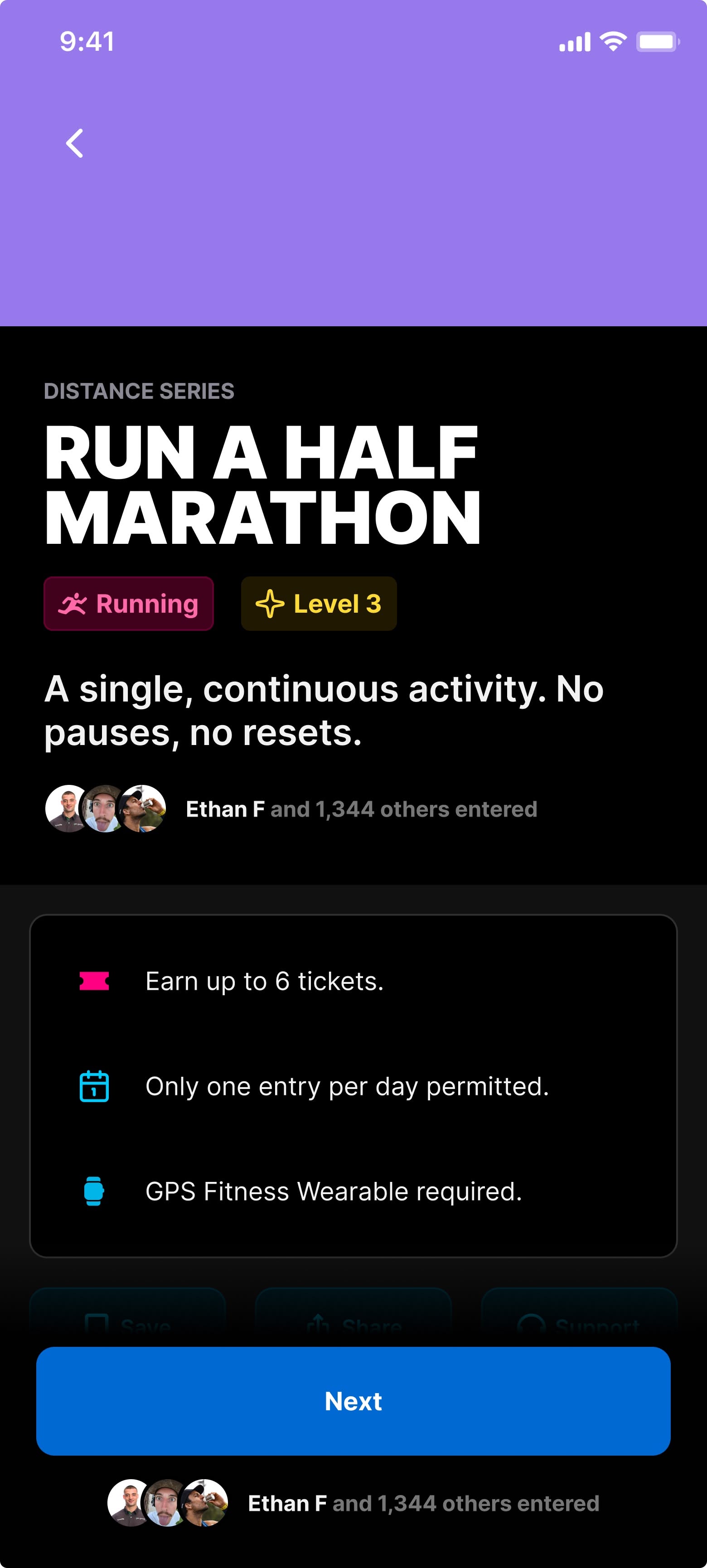
Each level within a Series has its own detail page. Users see the target (distance, discipline, requirements), their progress, and the path forward. Every level is a self-contained challenge that also nudges the user up the ladder.
Reward moment
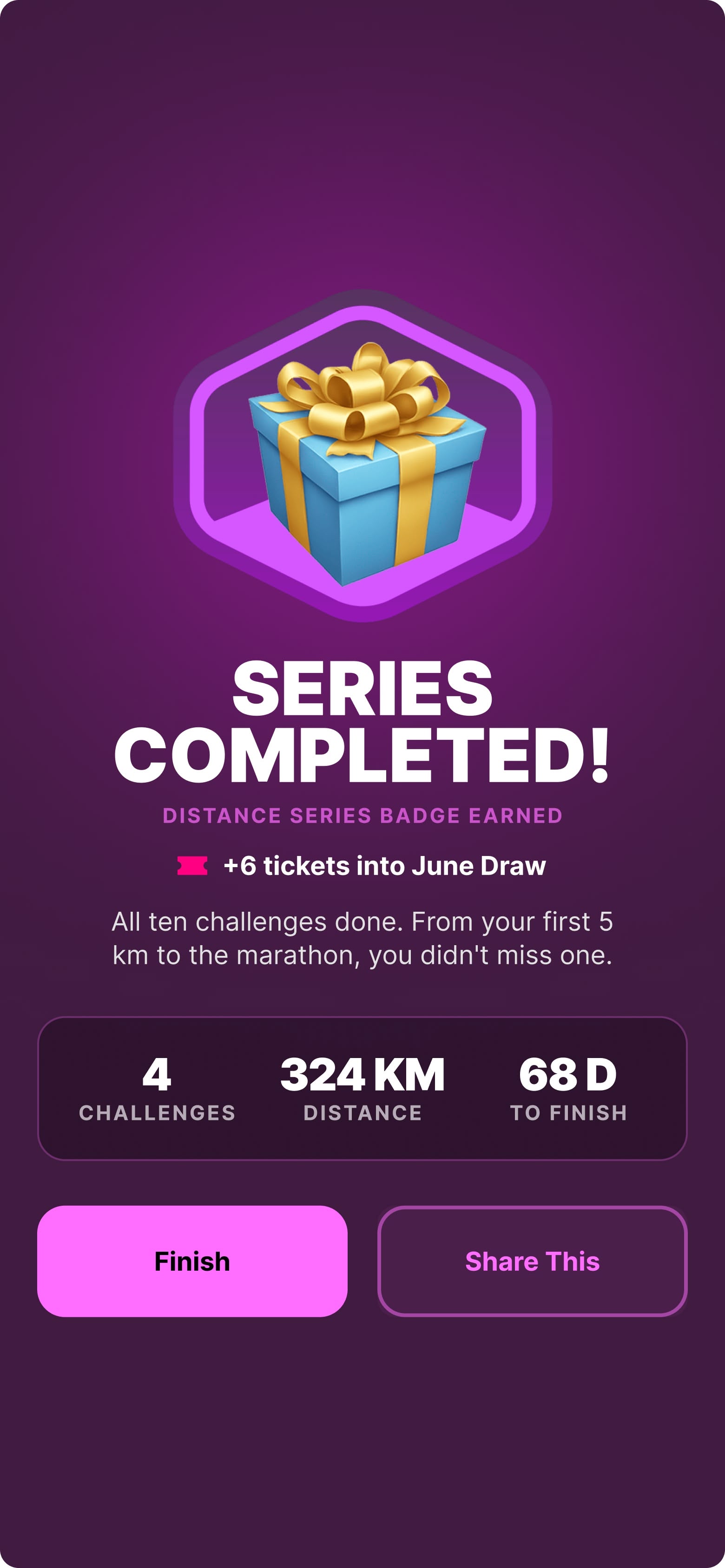
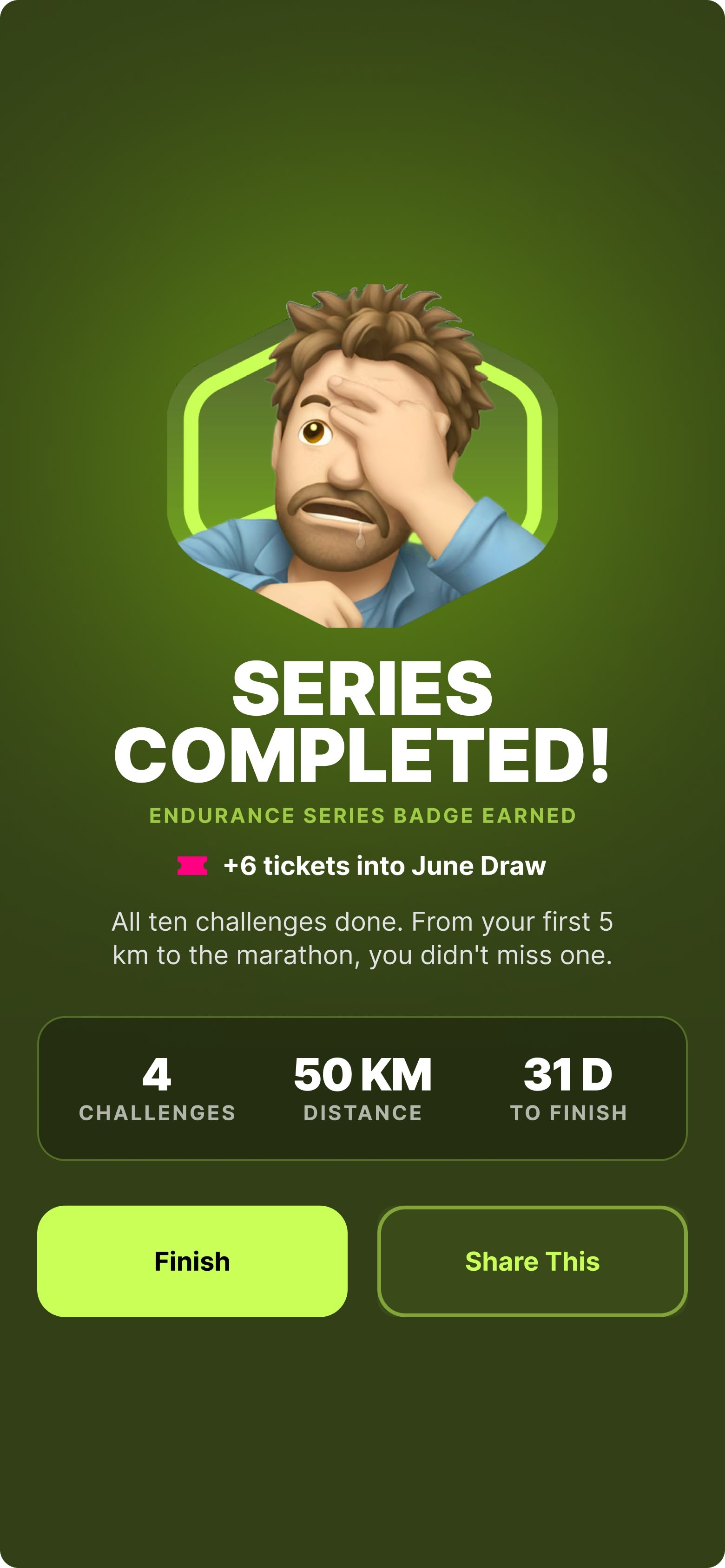
Series completion produces an exclusive digital badge, a static credential that lives on the user’s profile and appears on the user’s feed entry. The animated celebration reveal, designed as part of Phase 1, ships in a follow-up release after the MVP proves itself in market.
Outcome
Phase 1 design is complete. IA, MVP scope, structural design, and the static badge reward system are locked and handed to engineering. Build is in progress. The case study will be updated with shipped impact once the system is live and the engagement data lands.
The MVP is a deliberately narrow slice: three disciplines, a linear level progression, and a static reward. Elite Levels, Workouts, and the animated reveal are all designed and paused. The framing is that the platform earns its way to those additional layers by proving the core loop first.
What’s next?
MVP launch first. Static badge system, Running / Cycling / Swimming Series, engineering shipping in the current cycle.
Animated celebration reveal. Designed in Phase 1, released once the MVP is stable and the reward moment can carry the extra weight.
Elite Levels. The structural placement above Series completion is locked. Reintroduction depends on the adoption and continued engagement data from the MVP.
Workouts Series. The heterogeneous umbrella IA still needs another round of structural design and user testing before it ships. The problem is defined; the solve is a v2 workstream.
Sponsor-branded Series. Beyond the core disciplines, the next horizon is co-branded Series with the sponsors and partners already in the Hardcore Harry’s ecosystem.